$75 with free shipping, buy now!

Clinical Protocol: Slashing Clinic Downtime with the 15-Minute Rapid Prep Standard

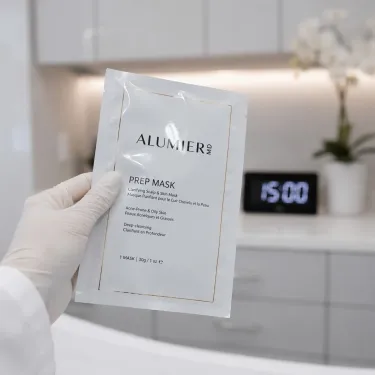
The $17 Billion Efficiency Gap: Why Your Med-Spa Schedule is Leaking Revenue
The global medical spa market was valued at $24.03 billion in 2025 and is accelerating toward $92.84 billion by 2035 [7]. According to the American Med Spa Association (AmSpa) 2026 State of the Industry Report, the most significant barrier to scaling service revenue is no longer patient acquisition—it is room occupancy efficiency [8].
But for many practitioners, the “prep wait” remains a massive operational bottleneck. Traditional topical application methods often tie up high-revenue treatment rooms for 45 to 60 minutes, with as much as 30% of that time lost to evaporation and inefficient absorption. This guide establishes the 15-Minute Rapid Prep Standard, a clinical protocol designed to reclaim 30 minutes per treatment slot while maximizing transdermal delivery kinetics.
The Science of Occlusion: Why Traditional Creams Fail After 30 Minutes
Core Conclusion: Open-air topical application is subject to “evaporation drug delivery” kinetics, which lead to molecular loss and inconsistent saturation levels [1].
Research published in PMC suggests that transdermal delivery has a specific “lag time” as the API diffuses through the stratum corneum [8]. When using traditional creams:
- Evaporation Interference: Water content evaporates, causing the concentration of the active ingredients to become unstable.
- Barrier Resistance: Without a dedicated occlusive seal, the skin’s natural defense mechanism repels a significant percentage of the formula.
- The 15-Minute Window: By creating a Factory-Sealed Occlusive System (like a hydrogel mask), you bypass the lag time. A focused review on transdermal systems confirms that controlled occlusion achieves uniform provision and prevents the “evaporative loss” seen in open-air application [3, 5].
Standardization: Traditional Cream vs. The 15-Minute Rapid Prep Protocol
Standardizing your prep protocol is the fastest way to stabilize clinical results and protect your margins.
| Clinical Metric | Traditional Cream (Open-Air) | 15-Min Rapid Prep (Sealed) |
|---|---|---|
| Average Prep Time | 45 – 60 Minutes | 12 – 15 Minutes |
| Evaporation Risk | High (Instability) | Zero (Occlusive Seal) |
| Removal Difficulty | Messy (Scrubbing required) | Clean (Single-sheet peel) |
| Cartridge Protection | Risk of grease clogging | Residue-free surface |
The Business Case: Recovering $250,000 in Annual Room Capacity
Operational math is the difference between a struggling clinic and a scaling enterprise. According to Grand View Research, the average revenue per medical spa room can reach $400,000 annually if utilized efficiently [1].
The “Room Recovery” Math:
- Traditional Model: 10 clients/day × 45 mins prep = 7.5 hours of room occupancy solely for prep.
- Rapid Prep Model: 10 clients/day × 15 mins prep = 2.5 hours of room occupancy for prep.
- The Result: You recover 5 hours of billable room time daily. At a $300 treatment average, that represents a potential revenue lift of $1,500/day—or roughly $300,000 per year in additional capacity.
This is why high-volume clinics are switching to the Billsu Prep & Calm System. It isn’t just about the product; it’s about the schedule.
Clinical FAQ: Implementing the 15-Minute Standard
Q: Does the 15-minute standard work for deep microneedling (1.5mm+)?
Fast Answer: Yes. The primary factor in deep tissue penetration is not time, but concentration and occlusion. By creating a hermetic seal over the treatment area, the hydrogel base ensures the API reaches the deeper dermal layers more effectively than an air-dried cream ever could.
Q: Can I white-label these masks for my clinic?
Fast Answer: Absolutely. In fact, providing a branded prep mask reinforces the “Premium Protocol” experience. You can explore OEM/Custom branding options here.
Q: Is there a risk of “Numbing” being too fast?
Fast Answer: To maintain compliance (especially for Facebook and payment gateways), we refer to this as the “Prep Wait.” The focus is on skin stabilization and ensuring the tissue is calm and receptive before invasive procedures begin.
References
- Grand View Research. Medical Spa Market Size and Share Analysis. 2024.
- PMC6311647. Transdermal Evaporation Drug Delivery Systems. 2023.
- PMC10997930. Transdermal Drug Delivery Systems: A Focused Review. 2024.
- PMC8007522. Assessment of Drug Delivery Kinetics to Epidermal Targets. 2024.
- PMC8317283. Recent Advances in Transdermal Drug Delivery Systems. 2025.
- SNS Insider. Medical Spa Market Size, Share Analysis & Growth 2035. 2026.
- AmSpa. 2026 Medical Spa State of the Industry Report. 2026.
- PharmTech. Delivery Kinetics for Topical Drugs. 2022.
Professional Disclaimer: The 15-Minute Rapid Prep Standard is a clinical guideline. Practitioners should always exercise professional judgment based on the specific device (e.g., Hydra Pen H5), treatment depth, and patient skin profile.