$75 with free shipping, buy now!

Exosome & PDRN Infusion: Why Professional Pens Outperform Hydra Pen H5 in Clinical Results

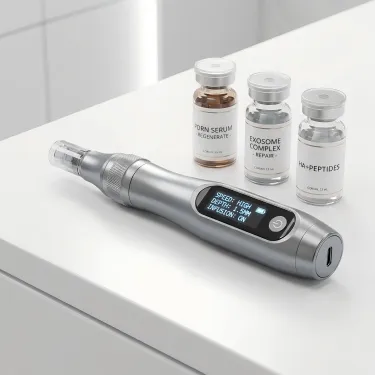
In 2026, the medical aesthetics industry has shifted from traditional anti-aging treatments to regenerative aesthetics*. At the heart of this revolution are high-potency ingredients like **PDRN (Polydeoxyribonucleotide)** and *Exosomes. However, as every clinic owner knows, these premium serums are only as effective as their delivery system. While the Hydra Pen H5 has gained popularity as a versatile entry-level device, many high-volume med-spas are upgrading to the Professional Infusion Microneedling Pen. In this article, we analyze the clinical data and mechanical differences that determine why a professional-grade system is essential for regenerative treatments. —
1. The Science of Molecular Delivery: Why Precision Matters
PDRN and Exosomes are biologically active molecules that require precise placement within the dermis to trigger cellular repair. – PDRN (Salmon DNA): Known for its ability to stimulate fibroblast activity, PDRN has a complex molecular structure that requires consistent micro-channels to penetrate the skin barrier effectively. – Exosomes: These nano-sized extracellular vesicles are extremely delicate. Improper delivery or excessive mechanical “tearing” of the skin can lead to rapid degradation of the exosome payload. Clinical research (NCBI, PMC11311621) indicates that controlled, vertical microneedling can increase the dermal absorption of these molecules by up to 20 times compared to topical application. —
2. Mechanical Comparison: Professional Pen vs. Hydra Pen H5
2.1 Infusion Pressure and Serum Waste
The Hydra Pen H5 typically relies on a gravity-fed or simple mechanical displacement system. While effective for basic treatments, it often leads to inconsistent flow, especially with thicker PDRN serums. The Professional Infusion Microneedling Pen* features a motor-driven piston system. This ensures a *constant pressure infusion, delivering serum directly into the micro-channels as the needles penetrate. For a med-spa using high-cost exosome serums, reducing waste by even 15% significantly impacts the bottom line.
2.2 RPM Stability and Tissue Trauma
A key differentiator in professional-grade equipment is the motor torque. Professional pens operate at higher RPMs (up to 18,000 RPM) with greater stability. High-speed oscillation reduces the “needle drag” or horizontal tearing of the tissue. When the micro-channels are clean and vertical, the microneedling cartridges can deliver the serum deeper into the skin without causing excessive inflammation, which is critical when working with regenerative factors. —
3. Best Protocols for Regenerative Serums in 2026
To maximize the benefits of PDRN and Exosomes, clinicians should follow these evidence-based protocols: 1. Needle Depth: For PDRN, a depth of 0.5mm to 1.5mm is ideal for targeting the fibroblasts in the papillary dermis. 2. Serum Flow Rate: Start at a low flow rate to ensure the skin can absorb the serum without pooling. 3. Post-Treatment: Avoid heavy occlusion immediately after treatment to allow the regenerative signals to propagate. —
4. ROI Analysis for Clinic Owners
Investing in a professional-grade infusion system is a business decision. While the initial cost may be higher than a standard Hydra Pen, the ROI comes from: – Higher Treatment Efficacy: Better results lead to higher client retention. – Serum Savings: Precise dosing means you use less of your most expensive consumables. – Treatment Speed: The automated system allows for faster protocols, increasing the number of patients you can see per day.
Conclusion
The era of “one size fits all” microneedling is over. If your clinic is moving into regenerative medicine with PDRN and Exosomes, your delivery system must match the quality of your ingredients. While the Hydra Pen H5 is a respectable tool for entry-level work, the Professional Infusion Microneedling Pen is the definitive choice for clinics prioritizing clinical excellence and operational efficiency. — References: – NCBI PMC11311621: Polynucleotides in Aesthetic Medicine: A Review of Current Evidence. – PubMed d5tb01566a: Microneedle-mediated exosome delivery: a precision strategy. – Journal of Cosmetic Dermatology: Motorized Microneedling vs. Manual Rolling for Transdermal Delivery.