$75 with free shipping, buy now!

The 3% Lidocaine Sweet Spot: Why Concentration and Delivery Matter for Aesthetic Success

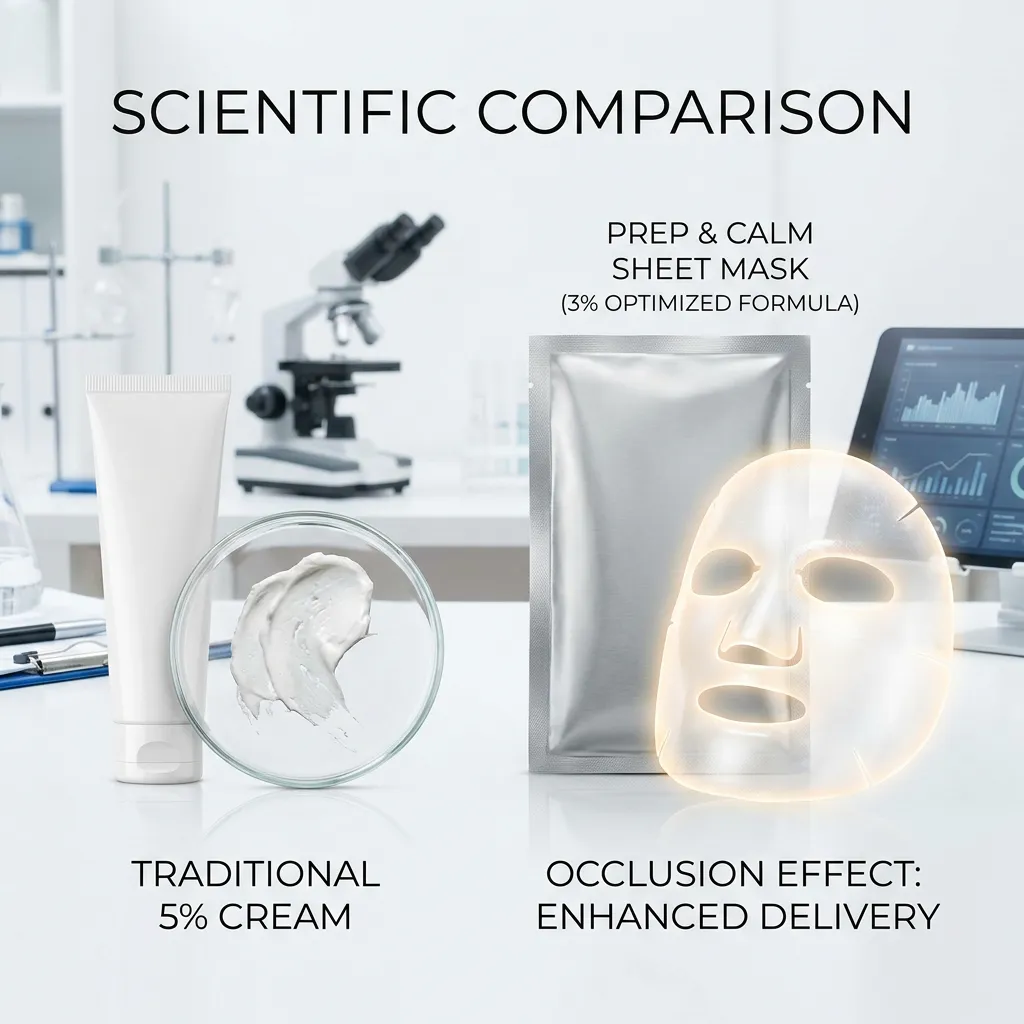
In the aesthetic supply market, there is a common misconception that “higher concentration equals better results.” While many over-the-counter (OTC) numbing creams push for 5% lidocaine, professional medical-grade protocols are shifting toward a more optimized 3% concentration, delivered via specialized formats.
Why? Because in clinical aesthetics, delivery efficiency is more important than raw concentration. This study examines the use cases for 3% lidocaine and why the “Mask Format” is the ultimate alternative to traditional high-percentage creams.
What is the Clinical Application of 3% Lidocaine?
Core Conclusion: 3% lidocaine is the professional “sweet spot” for high-frequency aesthetic procedures (PMU, microneedling) because it provides sufficient desensitization while minimizing the risk of systemic absorption and localized irritation.
At a 3% concentration, the skin’s nerve endings are effectively blocked for surface-level trauma without the “vascular rebound” effect often seen with higher concentrations. This makes it ideal for:
- Microneedling & Serum Infusion: Where skin barrier integrity is compromised.
- Permanent Makeup (PMU): Where precise muscle control and minimal swelling are required.
- Large Area Tattooing: Where managing the total systemic lidocaine load is a safety priority.
Comparison: 3% Mask Format vs. 5% Traditional Cream
Why do practitioners find that a 3% mask often feels “stronger” than a 5% cream? The answer lies in the Occlusion Effect.
| Factor | 5% Traditional Cream (Tubes) | 3% Professional Soothing Mask |
|---|---|---|
| Active Concentration | 5% | 3% (Optimized) |
| Delivery Method | Open Air (Evaporative) | Occlusive (Hermetic Seal) |
| Absorption Speed | Slow / Shallow | Rapid / Deep Dermal |
| Systemic Risk | Higher (Variable absorption) | Lower (Controlled dosage) |
| Clinical Verdict | Adequate for surface | Superior for deep needling |
The Power of Occlusion
When 3% lidocaine is delivered via a hydrogel or non-woven sheet mask, the mask material prevents the formula from evaporating. This creates a “pressure-driven” infusion, forcing the 3% molecules deeper into the dermis than a 5% cream that is simply sitting on the surface and drying out.
Professional Standard: OEM Pre-Procedure Soothing Mask (3% Optimized Complex)
Q&A: Professional Sourcing & Safety
Q: Is 3% lidocaine safe for broken skin procedures?
Fast Answer: While 3% is a lower concentration, all topical anesthetics should primarily be used on intact skin for “pre-procedure” prep. For “during-procedure” use on broken skin, always check local regulations and use products specifically formulated for open-skin safety.
Q: Can a 3% mask replace a 5% cream for PMU?
Fast Answer: Yes. Due to the sheet mask’s ability to provide uniform coverage and immediate cooling, most practitioners find the 3% mask more efficient for PMU prep. It reduces the “tensing” of the facial muscles more effectively than messy creams.
Maximizing Profitability with the 3% Mask Format
For clinic owners, the 3% mask isn’t just a safety choice; it’s an economic one.
- Predictable Cost: One mask = One treatment.
- Faster Turnover: 15 minutes of mask prep often outperforms 30 minutes of “cream + plastic wrap” prep.
- Client Satisfaction: The immediate cooling sensation of the mask format provides a “premium” feel that a greasy tube cannot match.
Conclusion: Science Over Percentage
The future of aesthetic prep is about Smart Delivery, not just high percentages. By choosing a professionally formulated 3% Prep & Calm Mask, you are prioritizing the “Big Truth” of aesthetics: better absorption, higher safety, and a smoother treatment experience.