$75 with free shipping, buy now!

Why Your Lidocaine Numbing Mask Works in One Batch but Not the Next: A Supplier Audit Guide for Clinics

Why Your Lidocaine Numbing Mask Works in One Batch but Not the Next: A Supplier Audit Guide for Clinics
A clinic can lose trust quickly when the same pre-procedure mask feels effective in one order but inconsistent in the next. The problem is often not the word “lidocaine” on the sales sheet. It is a missing quality system: no batch-specific certificate of analysis, unclear active-ingredient specification, uncontrolled sheet loading, or packaging that does not protect the product through its stated shelf life.
But concentration alone does not prove performance. This guide helps clinic owners, distributors, and OEM buyers audit a lidocaine numbing mask supplier before committing to a repeat order. It focuses on evidence that can be checked: identity, assay, uniformity, microbiological quality, packaging integrity, application instructions, and post-delivery batch records.
Why is a labeled lidocaine percentage not enough to compare two masks?
Core conclusion: A declared active percentage is only one part of product quality. The formulation, carrier, skin contact, application area, contact time, and label directions all influence topical delivery and safety.
A PubMed study comparing two lidocaine-prilocaine formulations used in vivo microdialysis and HPLC to measure dermal exposure. The study used the same nominal active combination—2.5% lidocaine and 2.5% prilocaine—but reported different dermal exposure profiles between the formulations in pigs [1]. That does not prove that one commercial mask is better than another; it does show why buyers should not compare products using concentration alone.
For an OEM order, ask the supplier to identify the active ingredient, strength, dosage form, carrier, intended skin condition, contact time, and storage requirements in the technical file. If a product page only describes a “soothing mask” and does not list lidocaine, do not publish a lidocaine claim until the manufacturer provides written formulation and labeling evidence.
Which documents should a clinic request before placing an OEM mask order?
Core conclusion: A credible supplier should be able to connect every finished batch to a defined specification and supporting release records.
| Document or record | What it should answer | What it does not prove by itself |
|---|---|---|
| Full ingredient and label file | What is in the mask, at what declared strength, and for which intended use? | It does not prove every batch matches the label. |
| Batch COA | Was the released batch tested against defined specifications? | A generic sample COA is not evidence for a later batch. |
| Microbiological report | Were microbial limits or sterility requirements evaluated for the product category? | It does not automatically mean the product is sterile. |
| Packaging and stability data | How are active content, moisture, seal, and shelf life protected? | A package photo is not a stability study. |
| Regulatory classification file | Is the product regulated as a cosmetic, drug, medical device, or combination product in the target market? | A factory certificate from one country does not authorize sale everywhere. |
ISO explains that ISO 13485 is a quality-management standard specific to medical devices and that third-party certification can demonstrate that an organization has met the standard’s requirements; ISO itself does not perform certification [4]. For a lidocaine-containing product, the buyer should also confirm the applicable drug or combination-product rules in the destination market rather than treating ISO 13485 as a universal drug approval.
How can a buyer test whether every mask in a batch is consistent?
Core conclusion: A practical receiving inspection should compare the shipment with the approved sample and the batch documents, not rely on appearance alone.
- Verify traceability: record the lot number, manufacture date, expiry date, supplier, carton count, and storage condition at receipt.
- Check seal integrity: inspect random units for leaks, lifted seals, pinholes, delamination, or dried-out sheet material.
- Compare physical uniformity: check sheet size, serum loading, folding pattern, odor, color, and wetness against the approved reference sample.
- Review the batch COA: confirm that the lot number on the COA matches the cartons received and that the test methods and specification limits are identified.
- Run a controlled internal-use check: under a licensed professional’s protocol, record contact time, skin response, ease of removal, residue, and client comfort. This is a workflow check, not a substitute for an assay or regulatory evaluation.
- Hold exceptions: quarantine damaged, unlabeled, expired, or undocumented units instead of mixing them into active inventory.
This approach turns an informal “the mask feels strong” opinion into a repeatable supplier scorecard. It also gives the clinic a defensible record if a customer reports unexpected irritation or inconsistent comfort.
What does occlusion change when a lidocaine mask is applied?
Core conclusion: Occlusion can change skin hydration and drug delivery, so contact time, area, intact-skin status, and removal instructions must be defined by the product label and qualified professional protocol.
In a randomized clinical study, an EMLA lidocaine-prilocaine formulation applied under an occlusive bandage showed a minimal effective application time of 45 minutes for the specific venous-cannulation model studied [2]. That result should not be copied as a universal timing instruction for every mask, skin area, concentration, or procedure.
Current DailyMed labeling for lidocaine-prilocaine cream warns about careful observation in young children and includes warnings related to methemoglobinemia and accidental ingestion; other topical local-anesthetic labels may have different instructions [3]. The evidence-based purchasing lesson is simple: the supplier must provide a usable label and contraindication file, not just a sales slogan such as “fast” or “deep.”
Do not apply a topical anesthetic product to broken or mucosal skin unless its authorized labeling and a qualified professional specifically support that use. Do not extend contact time, covered area, or dose because a previous client reported that the effect felt weak.
How does a documented supplier compare with a low-documentation supplier?
| Buying signal | Documented supplier | Low-documentation supplier |
|---|---|---|
| Ingredient claim | Matches approved label and technical file | Only appears in chat, images, or a salesperson’s promise |
| Batch evidence | Lot-specific COA and traceability | One undated “sample report” |
| Complaint handling | Written investigation and corrective-action process | Replacement promise without root-cause record |
| OEM change control | Notifies buyer before formula, film, seal, or label changes | Changes are discovered only after delivery |
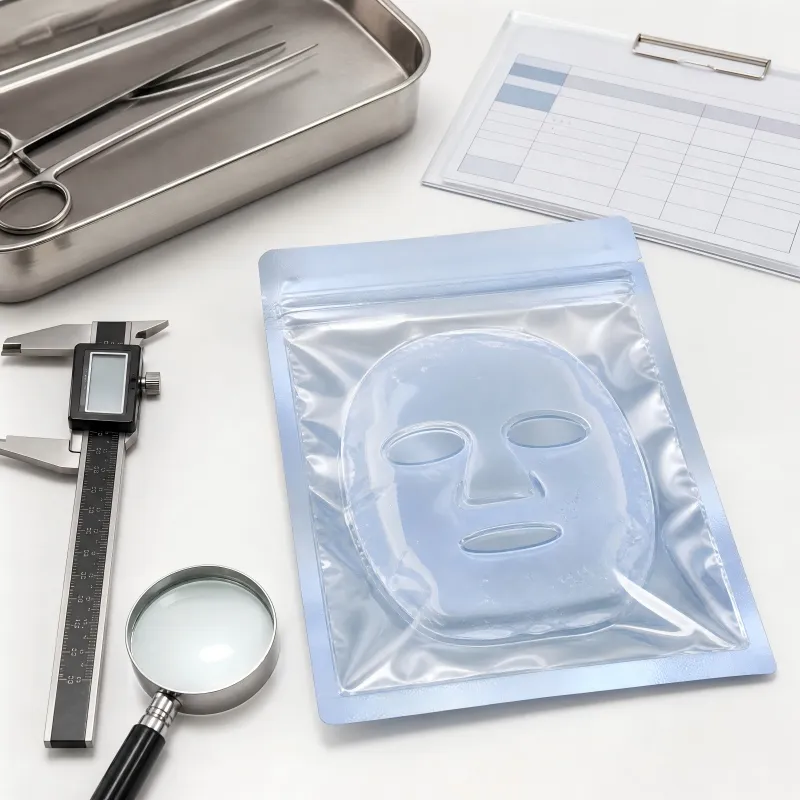
For the Billsu OEM Pre-Procedure Soothing Mask, the public product page currently describes a professional hydrogel sheet mask, rapid comfort enhancement, 15-minute preparation, and OEM/ODM supply. It does not publicly list a lidocaine concentration. Buyers who require a lidocaine formula should request the exact formulation, intended-market label, COA, and regulatory pathway for the selected OEM version before making that claim in marketing materials.
The business case: why batch documentation protects margin
Core conclusion: Documentation is not administrative overhead; it reduces the chance that a disputed batch becomes a treatment interruption, refund, or reputational problem.
The following is an illustrative planning model, not a reported industry benchmark. If a clinic uses 20 masks per week and a receiving inspection prevents one undocumented or damaged carton from entering treatment stock, the avoided cost is the clinic’s own purchase value plus any documented labor, rescheduling, refund, or disposal cost. The clinic should replace these assumptions with its actual figures:
| Planning variable | Illustrative assumption | Replace with your data |
|---|---|---|
| Weekly usage | 20 masks | Actual treatment count |
| Inspection time | 10 minutes per shipment | Actual staff time |
| Escalation trigger | Missing lot or mismatched COA | Your written QA rule |
The return is not a promised percentage. It is the difference between a traceable supply chain and an undocumented one: fewer surprises, faster supplier investigations, and better control over what professionals actually use on clients.
Clinical and procurement FAQ
Q: Can a supplier call a mask a lidocaine numbing mask without showing the concentration?
A: The buyer should not rely on a marketing phrase alone. Request the formulation, label, lot-specific COA, intended use, and destination-market compliance documents.
Q: Does ISO 13485 prove that a lidocaine mask is approved for sale?
A: No. ISO 13485 concerns a medical-device quality-management system. The applicable drug, cosmetic, or combination-product requirements must be assessed separately.
Q: Is a 15-minute contact time universal for lidocaine masks?
A: No. Contact time depends on the authorized formulation, label, skin condition, application area, and local requirements. Use the product-specific instructions and qualified professional judgment.
Q: Does the Billsu OEM soothing mask page confirm a lidocaine formula?
A: The public page confirms a pre-procedure soothing hydrogel mask and OEM/ODM supply, but it does not publicly state a lidocaine concentration. Confirm the selected OEM formula directly with the supplier before making a lidocaine claim.
References
- Wang, Y. et al. Percutaneous penetration kinetics of lidocaine and prilocaine from two local anesthetic formulations. Biological & Pharmaceutical Bulletin.
- EMLA clinical trial. Evaluation of a new cutaneous topical anesthesia formulation with an occlusive bandage. PubMed.
- National Library of Medicine. Lidocaine and prilocaine cream labeling. DailyMed.
- International Organization for Standardization. ISO 13485: Medical devices — quality management systems.
- U.S. Food and Drug Administration. Important reminders about medical-device registration and listing.
- Wahlgren, C. F. and Lillieborg, S. Topical anesthetic agents in dermatologic surgery: A review. PubMed.
- Razavi, B. M. and Fazly Bazzaz, B. S. A review and new insights to antimicrobial action of local anesthetics. European Journal of Clinical Microbiology & Infectious Diseases.
- Billsu. OEM Pre-Procedure Soothing Mask | Dual-Action Complex. Product specification page, accessed for public claims and product scope.
Professional Use Only: Lidocaine and other local anesthetics are regulated differently across markets. This article is a procurement and quality-audit guide, not a dosing instruction or a substitute for licensed clinical, regulatory, or legal advice. Use only a product whose label, formulation, and intended use are authorized for your market.