$75 with free shipping, buy now!

Why Lidocaine Prilocaine Numbing Masks Outperform Single-Ingredient Creams: The Science Behind Dual-Action Pain Relief

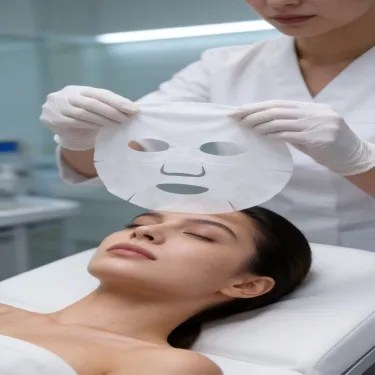
If you’ve been in the aesthetics game long enough, you’ve seen the same cycle: a client books a microneedling session, feels the first pass, tenses up, and the rest of the treatment becomes a negotiation. The solution isn’t “push through it” — it’s better prep.
That’s where lidocaine prilocaine numbing masks have quietly become the industry standard for professional pain management. And the reason has nothing to do with marketing. It’s chemistry.
The Problem with Single-Ingredient Numbing Creams
Most over-the-counter numbing products rely on one active ingredient — typically 4-5% lidocaine. It works. But it has limits:
– Fast onset, shallow depth: Lidocaine hits the surface nerves quickly but struggles to penetrate beyond the upper dermis without occlusion. – Short duration: Peak numbness fades within 30-45 minutes for many clients — right in the middle of a longer PMU session. – Uneven coverage: Creams spread inconsistently, especially on textured or curved areas like the jawline and brow bone.
For quick, surface-level procedures, single-ingredient creams are adequate. For anything requiring sustained, deep numbing across a full treatment area, practitioners are reaching for a different tool.
The Dual-Action Advantage: How Lidocaine + Prilocaine Work Together
When lidocaine and prilocaine are combined in a eutectic mixture — meaning they liquefy together at room temperature — something unexpected happens. The blend penetrates skin more effectively than either ingredient alone.
This isn’t a theory. It’s a well-documented pharmacological phenomenon that has been used in clinical settings for decades. Here’s what makes the combination superior:
| Property | Lidocaine Alone | Prilocaine Alone | Lidocaine + Prilocaine Combined |
|———-|—————–|——————|——————————–|
| Onset Speed | Fast (5-15 min) | Slow (20-30 min) | Moderate-fast (15-25 min) |
| Penetration Depth | Superficial | Moderate | Deeper dermal coverage |
| Duration | 30-45 min | 45-60 min | 60-90 min sustained |
| Side Effect Profile | Mild irritation | Lower irritation | Balanced, reduced individual load |
Why This Matters in Practice
Lidocaine is your sprinter — it blocks sodium channels on the surface, giving clients immediate relief from the initial needle contact.
Prilocaine is your marathon runner — it takes longer to activate but maintains a deeper, steadier numb that doesn’t fade halfway through a 90-minute microblading session.
Together, they cover the gaps that single-ingredient products leave wide open.
Mask Format vs. Cream: Why the Delivery System Changes Everything
Here’s where the conversation gets interesting. The active ingredients are only half the equation. How you deliver them determines whether the treatment room runs smoothly or stalls.
Numbing Creams: The Old Standard
Creams require thick application, plastic wrap occlusion, and careful cleanup before any procedure begins. Messy. Time-consuming. And product waste is significant — a good portion gets wiped off, not absorbed.
Numbing Masks: The Professional Upgrade
A professional numbing mask — a pre-formed sheet soaked in the active formula — solves three problems at once:
1. Uniform coverage: The mask conforms to facial contours, ensuring every square millimeter receives the same concentration. No gaps, no thin spots. 2. Self-occluding: The mask material itself acts as an occlusive barrier, eliminating the need for plastic wrap. This alone increases absorption by an estimated 30-40%. 3. Dose consistency: Every mask delivers the same amount of active ingredients. No guessing whether the technician applied “enough” or “too much.”
For high-volume clinics and studios, this translates to faster turnover, fewer client complaints, and predictable results from one appointment to the next.
Real-World Applications: Where Dual-Action Masks Make the Difference
Microneedling with Serum Infusion
When clients are relaxed, their skin doesn’t tense up against the needle — which means smoother passes, better serum absorption, and more consistent collagen stimulation. For procedures combining microneedling with exosome or PDRN infusion, proper numbing prep is the difference between a mediocre result and a transformative one.
Related: Exosome & PDRN Infusion: Why Professional Pens Outperform Hydra Pen H5
PMU and Permanent Makeup
Brow work and lip blush require precision that flinching destroys. A 60-90 minute numbing window gives the artist the full session without reapplying — which means crisp lines, even pigment distribution, and fewer touch-up appointments.
Tattoo Sessions (Large-Scale)
For back pieces, sleeve sessions, and cover-ups, the mask format allows artists to prep an entire zone before the needle touches skin. Clients arrive comfortable and stay comfortable.
What to Look for in a Professional-Grade Numbing Mask
Not all numbing masks are created equal. When sourcing for your practice or brand, here are the specifications that matter:
– Active ratio: A balanced lidocaine/prilocaine ratio (commonly 2.5%/2.5% or 5%/5%) provides the optimal synergy without overloading either ingredient. – Mask material: Non-woven, hydrogel-based sheets hold more solution and conform better to skin than cheap paper alternatives. – Occlusion quality: The mask should seal in moisture on its own — if it dries out in 10 minutes, the formula isn’t penetrating. – Shelf stability: Look for products that maintain potency through temperature fluctuations during shipping, especially for international orders. – OEM customization capability: For brands, the ability to adjust concentration, sheet size, and packaging is critical for market differentiation.
Learn more: OEM/ODM Lidocaine Prilocaine Numbing Mask at Billsu
FAQ: Dual-Action Numbing Masks
How long should I leave a lidocaine prilocaine mask on before a procedure?
For most treatments, 20-30 minutes provides full onset. Thicker skin areas (jawline, upper lip) may benefit from 35-40 minutes. Don’t exceed 60 minutes without professional guidance.
Can I use a dual-action numbing mask on broken skin?
Topical numbing masks are designed for intact skin before a procedure begins. For open-skin procedures (during or after needling), switch to a secondary topical gel formulated for broken-skin use.
Is the mask format better than cream for large body areas?
For face-sized zones, the mask format is superior. For larger body areas (back, arms, legs), a cream or gel may be more practical — though some manufacturers offer body-sized mask sheets for tattoo work.
How do I store numbing masks to maintain potency?
Keep them in a cool, dry place away from direct sunlight. Most professional-grade masks remain stable for 24-36 months when stored correctly. Avoid freezing — it can degrade the eutectic mixture.
The Bottom Line
The shift from single-ingredient numbing creams to dual-action lidocaine prilocaine numbing masks isn’t a trend — it’s a correction. Practitioners who’ve tried both know the difference in onset speed, duration, and client comfort. The chemistry is proven. The format is more efficient. And for clinics managing three to five appointments a day, those minutes add up to real revenue.
If you’re sourcing numbing products for your practice — or considering a private-label line for your brand — the lidocaine-prilocaine mask format is the benchmark worth building around.
Ready to explore? View our OEM/ODM numbing mask options — customizable concentrations, sheet sizes, and packaging for your market.