$75 with free shipping, buy now!

Combined Microneedling & Mesotherapy: 5 Reasons Cartridges Make or Break the Treatment

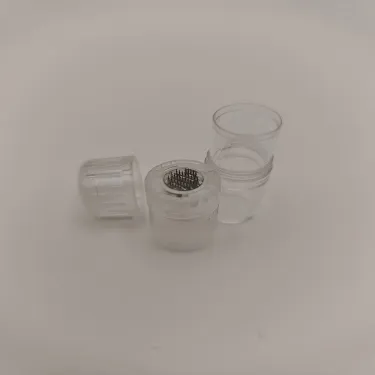
Core conclusion: Combining microneedling with mesotherapy is clinically sound — needling creates controlled micro-channels while the delivered serum penetrates them — but the synergy only exists if the delivery system works. The cartridge controls sterility, dose accuracy, and repeatability. If it fails, the whole protocol fails quietly.
1. Sterility: The Evidence Behind Single-Use
Microneedling breaches the stratum corneum, so anything on the needle or in the fluid has a direct route into the dermis. The cosmetic-procedure literature documents the failure mode: a 2025 retrospective study found 28 cutaneous nontuberculous mycobacteria (NTM) infections after cosmetic procedures — 75% M. abscessus complex, with a mean time to diagnosis of 9.8 weeks [1]. An earlier outbreak of 15 NTM infections after mesotherapy was traced to contaminated substances and poor aseptic technique [2]. A factory-sealed, single-use cartridge keeps the fluid path sterile from reservoir to skin. A generic tip with an unknown seal does not.
2. Delivery Consistency Determines Results
Microneedling reviews are consistent: reproducible technique — depth, speed, and delivered dose — drives both efficacy and safety [3]. The delivery science agrees: in microneedle-mediated delivery, the device controls how much active ingredient actually reaches the skin [4]. A cartridge that dispenses inconsistently turns a calibrated protocol into an uncontrolled one — some zones over-treated, others under-treated.
3. No Mid-Treatment Refills
A 3ml cartridge covers a full-face combined protocol in one pass. Refilling mid-treatment adds handling events — each one a contamination opportunity — and breaks the rhythm of the session. Patients notice the pause; the appointment runs long; the treatment loses its flow.
4. Repeatability Across Sessions
Mesotherapy is a dosing game: the planned volume of active ingredients must reach the same layer, session after session. Metered, auto-dispensing cartridges make treatment one comparable to treatment three. Inconsistent dispensing makes follow-up results impossible to reproduce — and impossible to explain.
5. Protecting the Handpiece
A cartridge that leaks redirects serum into the handpiece instead of the skin. Fluid ingress is the most common field-reported cause of microneedling handpiece failure, and repairs run well into the hundreds of dollars. The “cheaper” tip is often the most expensive one in the drawer.
FAQ
Q: Can I use generic tips with a Hydra Pen H5? Fast answer: They may fit, but fit is not validation. Leak resistance, flow calibration, and sterility are only verified for genuine cartridges [1][2][3].
Q: Is a combined microneedling + mesotherapy session safe? Fast answer: Yes, when performed by a trained professional with sterile, single-use cartridges and validated devices [3][4]. The safety margin is determined by the consumables, not just the technique.
References
- Zeng R, et al. Cutaneous Nontuberculous Mycobacteria Infections Following Cosmetic Procedures: A Retrospective Study. Infect Drug Resist. 2025;18:2301–2309. doi:10.2147/IDR.S517138. PMC12065458
- Sañudo A, et al. Nontuberculous mycobacteria infection after mesotherapy: preliminary report of 15 cases. Int J Dermatol. 2007;46(6):649–653. doi:10.1111/j.1365-4632.2007.02976.x. PubMed
- Jaiswal S, Jawade S. Microneedling in Dermatology: A Comprehensive Review of Applications, Techniques, and Outcomes. Cureus. 2024;16(9):e70033. doi:10.7759/cureus.70033. PMC11499218
- Yang D, Chen M, Sun Y, et al. Microneedle-mediated transdermal drug delivery for treating diverse skin diseases. Acta Biomater. 2021;121:119–133. doi:10.1016/j.actbio.2020.12.004. PubMed
Related Guides & Supply
- Hydra Pen H5 Needles vs. Generic Tips: A Data-Backed Procurement Guide
- Microneedling & Mesotherapy Cartridge Selection: Clinical Guide
- 34G vs. 30G Meso Needles: The Physics of Painless Mesotherapy
- Supply: Original Hydra Pen H5 Serum Cartridges (3ml Auto-Dispensing)
Written by the Billsu Clinical Procurement Team. Literature links verified August 2026. This article is for procurement and educational purposes; treatment decisions should be made by a licensed medical professional.