$75 with free shipping, buy now!

Neck Wrinkles Treatment: What the Evidence Says About HA Skin Boosters

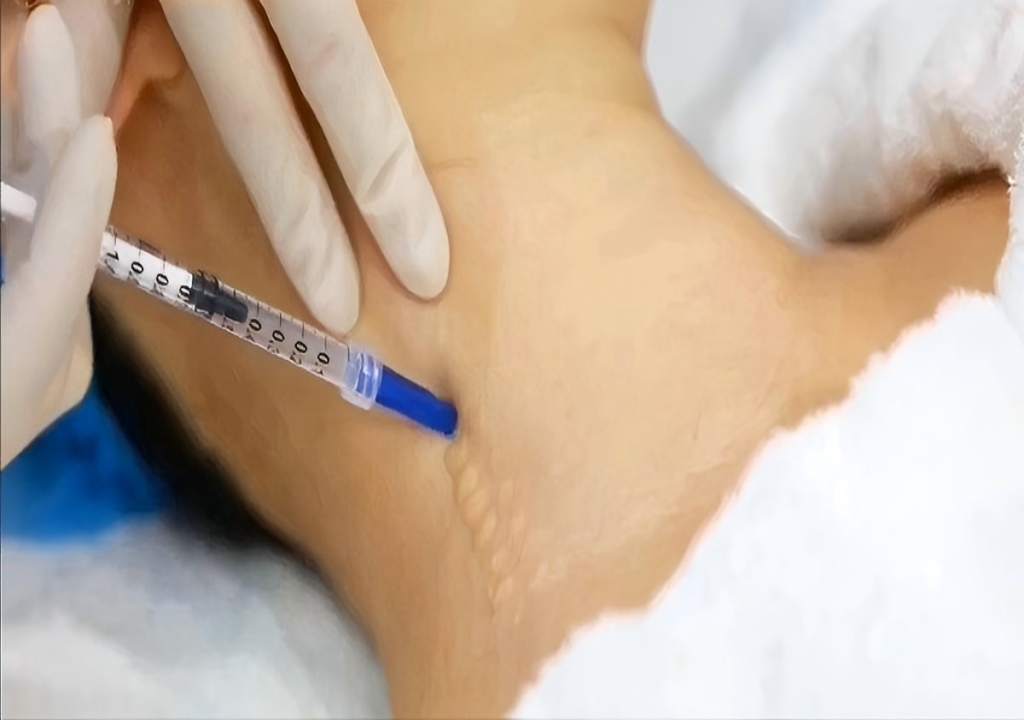
Core answer: Neck wrinkles are treatable, and the strongest published evidence for injectable treatment points to hyaluronic-acid-based products. A 2023 randomized controlled trial found an HA micro-filler significantly improved superficial wrinkles and skin quality. This guide explains the mechanism, how products like HEARTY fit the evidence, and what a treatment course involves.
Why Neck Wrinkles Form
Neck skin ages like facial skin, but thinner dermis and constant movement make wrinkles appear earlier and deeper. The underlying biology is well documented: dermal collagen declines with age, and aged fibroblasts lose the ability to maintain the extracellular matrix that keeps skin firm [1][2]. Ultraviolet exposure accelerates the process, and posture habits such as prolonged “tech neck” folding deepen creases over time.
There is no fixed age threshold in the literature: collagen production declines progressively from early adulthood, and how fast wrinkles form depends on UV exposure, genetics, and lifestyle [1][2]. The common claim that wrinkles “start after 25” is a simplification; prevention (daily SPF, posture) matters at every age.
What the Evidence Says About HA Injectables
- A 2023 randomized, prospective, controlled multicenter study showed that a hyaluronic-acid-based micro-filler significantly improved superficial wrinkles and overall skin quality, with a favorable safety profile [3].
- HA “skin boosters” are defined in the literature as intradermally injected HA products aimed at skin quality — hydration, elasticity, and fine lines — rather than volumization [4].
- Mechanistically, intradermal HA restores water-binding capacity in the dermis and supports fibroblast activity; HA-based mesotherapy for facial rejuvenation is well reviewed [5].
The clinical takeaway: the evidence supports HA-based intradermal treatment for fine lines and crepey texture — the exact profile of most neck-wrinkle concerns.
HEARTY in This Context
HEARTY is an injectable sodium hyaluronate compound solution containing hyaluronic acid, vitamins, and amino acids — the classic “skin booster” formulation [4][5]. In practical terms, it fits the evidence-backed category of intradermal HA products: hydration, skin-quality improvement, and softening of superficial lines.
Two honest caveats: specific clinical-outcome claims for any branded product should be confirmed against the manufacturer’s clinical documentation, and a practitioner should assess wrinkle severity before recommending a course. A typical protocol is one session per month, three sessions per course, with aftercare that includes: no water contact, exercise, or touching the area for 24 hours; and avoiding smoking, alcohol, and spicy or irritating foods for one week after injection.
FAQ
Q: At what age do neck wrinkles start? Fast answer: There is no fixed threshold. Dermal collagen declines progressively with age and UV accelerates it [1][2]; visible neck lines depend on skin type, sun exposure, and posture.
Q: How many sessions of an HA booster are needed? Fast answer: Protocol-dependent; the common course is three sessions at monthly intervals, with maintenance sessions as recommended by the treating practitioner.
Q: Can neck wrinkles be fully erased? Fast answer: Injectable HA treatment is evidence-supported for visible improvement of fine lines and skin quality [3]; deep creases may need combination approaches. A realistic goal is improvement, not perfection.
References
- Fisher GJ, Varani J, Voorhees JJ. Looking older: fibroblast collapse and therapeutic implications. Arch Dermatol. 2008;144(5):666–672. doi:10.1001/archderm.144.5.666. PubMed
- Quan T, Fisher GJ. Role of Age-Associated Alterations of the Dermal Extracellular Matrix Microenvironment in Human Skin Aging: A Mini-Review. Gerontology. 2015;61(5):427–434. doi:10.1159/000371708. PubMed
- Fanian F, Deutsch JJ, Bousquet MT, et al. A hyaluronic acid-based micro-filler improves superficial wrinkles and skin quality: a randomized prospective controlled multicenter study. J Dermatolog Treat. 2023;34(1):2216323. doi:10.1080/09546634.2023.2216323. PubMed
- Yi KH, Winayanuwattikun W, Kim SY, et al. Skin boosters: Definitions and varied classifications. Skin Res Technol. 2024;30(3):e13627. doi:10.1111/srt.13627. PubMed
- Iranmanesh B, et al. Employing hyaluronic acid-based mesotherapy for facial rejuvenation. J Cosmet Dermatol. 2022;21(12):6605–6618. doi:10.1111/jocd.15341. PubMed
Related Guides & Supply
- The Role of Specialized Needles in Modern Beauty Mesotherapy
- How to Use a 4-Pin Multi-Injector Needle
- PDRN Absorption Windows and Microneedling Settings
- Supply: FITTER 4-Pin 34G 1.2mm Multi-Injector Needle (Box of 20)
Written by the Billsu Clinical Procurement Team. Literature links verified August 2026. This article is for educational purposes; product selection and treatment should always be determined by a licensed medical professional.