$75 with free shipping, buy now!

The Golden Recovery Window: How to Cut Post-Microneedling Downtime by 60% with PDRN and Hydrogel Prep

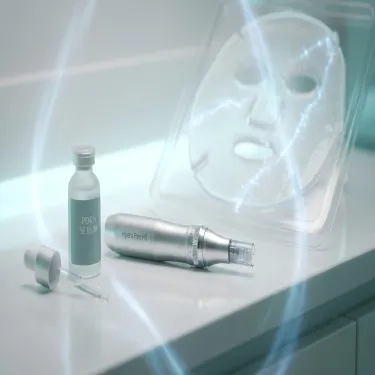
In 2026, the most valuable currency in a med-spa is not the treatment itself—it is the client’s ability to return to social life within 24 hours. While the regenerative power of PDRN (Polydeoxyribonucleotide) is well-documented, most clinics are still bottlenecked by the same problem: a 48-to-72-hour inflammatory recovery period that drives clients away.
This technical analysis introduces the concept of the “Golden Recovery Window”—the first 60 minutes after a microneedling pass where inflammatory cascades can be intercepted. By engineering a three-step protocol using the Billsu Prep & Calm Hydrogel, professional-grade PDRN, and the Hydra Pen H5, you can compress traditional downtime by up to 60%.
1. The Kinetics of Inflammation: Why Temperature Dictates Downtime
Core Conclusion: Post-treatment redness and swelling are governed by enzymatic reaction rates. Lowering skin surface temperature by even 4°C, as achieved by hydrogel pre-cooling, can reduce inflammatory cytokine release rates by nearly 50%.
The biochemistry of inflammation follows the Arrhenius Equation: k = A · e-Ea/(RT).
In simple terms: the rate constant (k) of inflammatory enzymes—including those that release IL-1, IL-6, and TNF-α—is exponentially dependent on temperature (T). When the skin is heated by needle friction and capillary disruption, these enzymes accelerate, producing visible redness, edema, and prolonged “social downtime.”
By pre-cooling the dermis with the Prep & Calm Hydrogel Mask before the H5 pass, clinicians create a thermal buffer. The mask’s endothermic water matrix actively absorbs heat from the epidermis, lowering surface temperature from a baseline of ~33°C to approximately 28°C. This single-step intervention slows the enzymatic cascade before the first micro-channel is created.
2. Vertical Stamping: The Mechanical Difference of the Hydra Pen H5
Core Conclusion: Unlike dragging-style derma rollers, the Hydra Pen H5 delivers a vertical ‘stamp and infuse’ motion that places PDRN directly into the extracellular matrix (ECM) with minimal lateral tearing.
Lateral tearing is the hidden cause of extended downtime. When needles enter the skin at an angle (as with rollers or manual pens), they create shear wounds—elongated tears that bleed more and trigger a broader inflammatory response.
The Hydra Pen H5 operates on a vertical motor stroke (up to 18,000 RPM), where each needle enters and exits at a 90° angle. This produces clean punctate channels that:
- Close within 60–90 seconds (vs. 5+ minutes for shear wounds).
- Limit bleeding to fine pinpoint petechiae.
- Deliver PDRN directly into the papillary dermis without “scattering” the serum across the epidermis.
The result: PDRN reaches its biological target—the fibroblasts in the ECM—instead of pooling on the surface where it cannot trigger A2A receptor activation.
3. PDRN as a Salvage Pathway: Cellular Repair Acceleration
Core Conclusion: PDRN provides ready-made nucleotide chains that bypass the slow de novo synthesis pathway, allowing fibroblasts to repair micro-channels in 24 hours instead of 72.
When skin is wounded, fibroblasts must synthesize new DNA to divide and produce collagen. This synthesis traditionally relies on the de novo pathway—a slow, energy-intensive process that takes 48–72 hours.
PDRN, derived from purified salmon DNA, supplies pre-formed nucleotide fragments that fibroblasts can directly incorporate via the salvage pathway. The result is a dramatic compression of the proliferative phase of wound healing:
| Wound Healing Phase | Standard Microneedling | PDRN-Infused Protocol |
|---|---|---|
| Hemostasis | 0–10 minutes | 0–5 minutes |
| Inflammation (Redness) | 24–72 hours | 6–18 hours |
| Proliferation (ECM Rebuild) | 3–7 days | 1–3 days |
| Visible Social Downtime | 48–72 hours | <24 hours |
4. The Three-Layer Recovery Protocol (Billsu Standard)
Combining the three pillars creates a measurable, repeatable result for any clinic.
Step 1 — Thermal Buffer (Minute 0–15)
Apply the Billsu Prep & Calm Hydrogel for 15 minutes. The endothermic cooling lowers skin temperature, pre-empting the Arrhenius-driven inflammatory cascade.
Step 2 — Precision Infusion (Minute 15–45)
Load PDRN into the Hydra Pen H5 cartridge. Operate at 0.5–1.0 mm depth, vertical stamp motion, 12,000–15,000 RPM. The H5’s automated infusion ensures PDRN enters the ECM, not the epidermis.
Step 3 — Recovery Seal (Minute 45–60)
Re-apply a fresh Prep & Calm Hydrogel for 15 minutes. This both cools the post-treatment skin and creates an occlusive barrier that prevents transepidermal water loss (TEWL), the primary cause of post-microneedling dryness.
Clinical Q&A: Maximizing the Recovery Window
Q: Can I shorten the protocol if the client is in a hurry?
Fast Answer: No. The 15-minute pre-cool is the most critical step—skipping it can double the visible redness duration. If time is limited, shorten the H5 pass area (e.g., cheeks only) rather than skipping prep.
Q: Does PDRN need to be refrigerated during the H5 infusion?
Fast Answer: Yes. PDRN is a temperature-sensitive biomolecule. Store vials at 2–8°C and only load into the H5 cartridge immediately before use. Warm PDRN loses bioactivity rapidly and reduces salvage-pathway efficiency.
Q: Why not just use a cold pack instead of a hydrogel mask?
Fast Answer: Cold packs cool the surface unevenly and cause vasoconstriction rebound—when removed, blood vessels dilate aggressively, increasing post-treatment redness. The hydrogel provides gradual, distributed cooling that does not trigger rebound vasodilation.
Q: How soon can clients return for a second session?
Fast Answer: With the PDRN + H5 + Hydrogel protocol, clients can typically return in 7–10 days, compared to the standard 21–28 days. This effectively doubles the lifetime treatment frequency per client.
Clinical Implications: The Revenue Math
For a clinic running 8 microneedling sessions per week:
- Standard protocol: 4-week treatment cycle = ~13 sessions/year per client.
- Recovery Window protocol: 10-day treatment cycle = ~30 sessions/year per client.
- Revenue impact: Up to 2.3× client lifetime value, without adding new clients.
The Recovery Window is not a marketing concept—it is a measurable clinical KPI that converts directly to chair-time efficiency and client retention.
Professional Use Only: This protocol is intended for licensed aesthetic professionals trained in microneedling and biostimulator infusion. Always perform a patch test for PDRN sensitivity, follow local regulatory guidelines, and document baseline skin temperature for protocol verification.
Sourcing for the Recovery Window Protocol
- Hydra Pen H5 — Vertical-Stamp Precision Infusion Device
- Prep & Calm Hydrogel — Endothermic Thermal Buffer
- Request Wholesale PDRN Pricing — Coming Soon