$75 with free shipping, buy now!

Stop Wasting Clinic Hours: The Real Cost of Traditional Pre-Procedure Prep

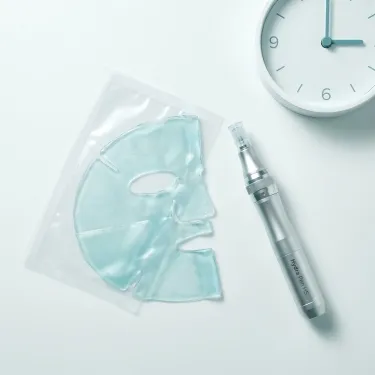
If you run a busy aesthetic clinic, you already know what the “prep wait” is doing to your schedule. A room tied up. A bed occupied. A client sitting there for 45 minutes with a greasy face under a sheet of plastic wrap.
In 2026, the most expensive thing in your practice is not your laser machine. It is the dead time in your calendar.
The “Jar” Problem: Hygiene or Liability?
Core Conclusion: Every time a spatula goes into a communal cream jar, you are creating a cross-contamination risk that your high-end clients are quietly judging you for.
Let’s be direct about the big jars of topical cream sitting on your prep trolley.
In a post-COVID, medical-grade environment, dipping a spatula into a shared container for client after client is not just an infection control issue—it is a brand perception problem. High-end clients paying for premium treatments are paying for a sterile, controlled experience. When you tear open a factory-sealed, single-use prep mask in front of them, the unspoken message is immediate: “We take your safety as seriously as a hospital does.”
No communal jar. No spatula. No guesswork.
| Prep Method | Cross-Contamination Risk | Client Perception | Per-Treatment Cost Control |
|---|---|---|---|
| Communal Cream Jar | High (Repeated spatula entry) | Amateur-adjacent | Unpredictable (Overuse common) |
| Single-Use Sealed Mask | Zero | Clinical-grade sterile | Fixed (One unit = one treatment) |
Time is Money: Why 15 Minutes is the New 45
Core Conclusion: Air-dried creams evaporate. Single-use sealed masks do not. The difference is 30 recovered minutes per treatment slot.
Traditional prep creams need 40 to 50 minutes because they are fighting their own evaporation. The moment you spread an open-air cream on skin, it starts drying. The clock is working against the chemistry.
A factory-sealed single-use mask creates a closed system. The formula has nowhere to go except into the skin. There is no evaporation. No top-up needed. No standing next to the client checking if it has “kicked in yet.”
The math that matters:
- 45-minute traditional prep → 15-minute single-use mask prep = 30 minutes recovered per client
- 30 minutes × 5 treatment days = 2.5 hours of additional chair time per week
- 2.5 hours at your average treatment rate = 3 to 4 additional billable procedures weekly
That is not a product upgrade. That is a scheduling decision.
The “Grease Scrub” Problem Nobody Talks About
Core Conclusion: Scrubbing thick cream off a face before microneedling is pre-irritating the skin before you even start. It also clogs cartridges.
Here is the part that nobody puts in a brochure.
After 45 minutes of traditional topical cream, someone has to remove it. That means 5 minutes of wiping and scrubbing with gauze across a face you are about to needle. You are mechanically irritating the epidermis before your first pass. If the skin is already reactive, you have just made your post-treatment redness worse before the treatment starts.
And if you miss a patch? Residual cream in the micro-channels of your needle cartridge. That is a blocked tip, a wasted cartridge, and an uneven infusion run.
Single-use water-soluble prep masks change the removal step entirely:
- Peel off the mask as a single clean sheet.
- One wipe with sterile gauze.
- Skin is hydrated, calm, and clean.
- Needle in seconds.
No residue. No pre-irritation. No blocked cartridges.
The B2B Reality: Your Brand, Your Protocol
Core Conclusion: Generic pharmacy tubes have no brand equity. A clinic-branded single-use prep mask is a touchpoint that reinforces your positioning every single session.
If you are sourcing prep products from a local pharmacy or a generic distributor, you are delivering a commodity experience. Nothing on that product says who you are.
White-label (OEM/ODM) single-use prep masks let you put your clinic name, your logo, and your protocol identity on every unit. When a client holds up a mask that says your clinic’s name before their treatment begins, it is a brand moment. When they refer a friend, they describe “my clinic’s prep protocol,” not “some cream they put on.”
For multi-location operators or distributors building out a product line, this is where margin lives. You are not selling a mask. You are selling a branded clinical standard.
Clinical Q&A: The Questions Clinic Owners Actually Ask
Q: Is a single-use mask actually as effective as 45 minutes of traditional cream?
Straight answer: Effectiveness depends on the formula and the seal. A correctly formulated single-use hydrogel mask with an occlusive barrier achieves full skin-surface saturation in 15 minutes because the formula cannot evaporate. A cream left open to air for 45 minutes is fighting constant molecular loss. Sealed delivery wins on efficiency, not just convenience.
Q: What is the minimum order quantity for OEM branded masks?
Straight answer: MOQ depends on the customization level. Standard single-color label print typically starts at 500 to 1,000 units. Full custom packaging (box, individual pouch, clinic branding) starts at 2,000 to 5,000 units. Request a formal quote to get exact numbers for your volume.
Q: Can these masks be used with RF microneedling, not just standard microneedling?
Straight answer: Yes. The cooling base effect of a hydrogel mask is directly beneficial before RF treatments because it lowers baseline skin temperature, which allows RF energy to penetrate more effectively while reducing surface discomfort. The same mask, a broader protocol application.
What This Looks Like in Practice
For a clinic doing 8 microneedling sessions per day:
- Old model: 8 × 45-minute prep waits = 6 hours of room occupancy just for prep.
- New model: 8 × 15-minute prep waits = 2 hours of room occupancy for prep.
- Recovered capacity: 4 hours of room availability, daily.
That recovered room capacity is not theoretical. It is additional treatments, shorter client wait times, or the ability to run two prep rooms in parallel without hiring additional staff.
Professional Use Only. All prep protocols should be adapted based on treatment type, client skin profile, and local regulatory requirements. Always verify product formulation suitability before clinical use.