$75 with free shipping, buy now!

Hydra Pen H5 Needles vs. Generic Tips: A Data-Backed Procurement Guide for Med-Spas

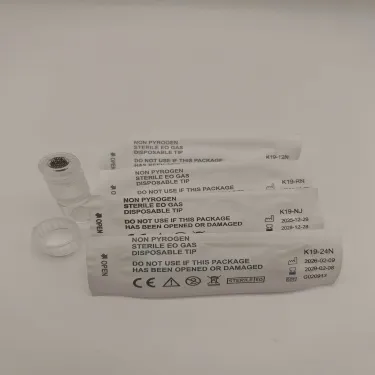
Core Conclusion: In microneedling, the cartridge is the safety device. Clinical reviews show that consistent needle depth and uniform product delivery determine both efficacy and adverse-event risk [1][2], while infection reports after cosmetic needling procedures repeatedly trace back to contaminated fluids and failed aseptic technique [3][4][5]. Genuine Hydra Pen H5 3 ml auto-dispensing cartridges cost more per pack — and measurably less over the life of your device.
If you run a med-spa with a Hydra Pen H5, the cartridge you snap into the handpiece is not a minor consumable. It controls three things at once: how evenly serum is delivered across the treatment area, whether the fluid pathway stays sterile, and how much your device costs you over its lifetime.
This guide compares genuine Hydra Pen H5 3 ml auto-dispensing cartridges against generic “compatible” tips using three evidence layers: peer-reviewed literature on microneedling technique and post-procedure infections, FDA device-classification records for microneedling systems, and a total-cost-of-ownership (TCO) framework for clinic procurement. If you currently buy cartridges on unit price alone, the data below explains why that is usually the most expensive way to buy them.
Why the 3 ml Auto-Dispensing Cartridge Design Matters
A genuine H5 cartridge is a single sealed unit: the 3 ml serum reservoir and the needle array are engineered as one component that snaps into the handpiece and delivers product while the pen is in motion. Three design properties have direct clinical consequences:
- Session-size dosing. 3 ml covers a full-face-and-neck protocol without a mid-treatment refill. Every refill is an extra handling event — another surface contact, another contamination opportunity — and an interruption that breaks treatment rhythm.
- Flow uniformity. Auto-dispensing meters serum in proportion to needling passes, so each zone receives a comparable dose. The microneedling literature is consistent that reproducible technique — depth, speed, and delivered dose — is what makes outcomes predictable [1][2].
- A sealed fluid path. The reservoir stays closed until the cartridge is engaged. A cartridge that leaks redirects serum into the handpiece instead of the skin — a failure mode that turns a $400+ device into a repair ticket.## The Infection-Control Argument, From the Literature
The Infection-Control Argument, From the Literature
Microneedling works by creating controlled micro-injuries: needles breach the stratum corneum, which is exactly why contamination control is non-negotiable. Anything on the needle or in the delivered fluid has a direct route into the viable dermis.
The most instructive evidence comes from the nontuberculous mycobacteria (NTM) literature on cosmetic procedures:
- Sañudo et al. collected 15 cases of NTM infection after mesotherapy in a 6-month period, presenting as nodules and abscesses 1–12 weeks after treatment. The authors traced the outbreak to contaminated injected substances and poor aseptic measures by nonprofessional practitioners [3].
- Zeng et al. retrospectively identified 28 patients with cutaneous NTM infections after cosmetic procedures — 24 culture-positive, 75% Mycobacterium abscessus complex. Mean incubation was about 3 weeks; mean time to diagnosis was 9.8 weeks, underlining how delayed and difficult these infections are to treat [4].
- Atkins and Gottlieb note that NTM skin and soft-tissue infections are underrecognized and hard to treat, and that the rise of cosmetic procedures has been associated with sporadic cases and outbreaks. Mycobacteria are water- and environment-associated organisms — moisture-retentive equipment is precisely the niche they colonize [5].
To be precise: these outbreaks were not caused by microneedling cartridges. They are cited because they define the failure mode that cartridge design is meant to prevent — contaminated fluid, breached skin, and delayed diagnosis. A generic tip of unknown sterilization validation and questionable seal integrity reintroduces the two vectors you actually control: the sterility of the fluid path and the cleanliness of the device.
Comparison Table: Genuine H5 Cartridge vs. Generic Tip
| Criterion | Genuine H5 cartridge (3 ml auto-dispensing) | Generic / compatible tip |
|---|---|---|
| Reservoir & seal | Engineered seal with validated leak resistance | Variable fit; leakage into the handpiece reported in field service data |
| Sterility assurance | Sealed, sterile, single-use, lot-traceable | Sterilization validation unknown; repackaging common |
| Flow behavior | Calibrated auto-dispensing, consistent per pass | Manual / gravity feed; flow drops as reservoir empties |
| Needle array QC | Verified geometry, depth, and tip finish | Micro-defects possible: bent tips, uneven needle length |
| Documentation | Sterility certificates, lot records, compliance docs | Usually none |
| Unit price | Higher | Roughly $20–30 lower per pack |
| Cost over device lifetime | Lower | Higher — repair, downtime, patient risk |
The Total-Cost-of-Ownership Math
The unit-price gap is the only number in the generic-tip argument, so it is worth placing next to the other numbers. (The figures below are field benchmarks reported by med-spa operators and device-repair services — planning estimates, not published trial data.)
| Line item | Typical figure |
|---|---|
| Savings per generic pack | $20–30 |
| Packs per year (busy single-pen practice) | ~50–100 |
| Max annual savings from generic | ~$1,500–3,000 |
| Device repair after fluid ingress | $200–500 per incident |
| Lost chair time per incident | 30–60 minutes |
| Client-visible complication | Reviews, refunds, liability exposure |
The breakeven is stark: one or two leakage incidents erase a full year of generic-tip savings — and those are the incidents you can see. The ones you cannot see, such as a questionable seal that lets fluid bypass or an inconsistent needle that over- or under-treats one zone, show up later in outcomes and reviews.
Regulatory Context: What “FDA-Cleared” Means for Your Consumables
Microneedling devices are regulated in the U.S. as Class II medical devices. The SkinPen Precision system, the best-known example, was authorized through De Novo request DEN160029 (Bellus Medical, 2018) and subsequently cleared under 510(k)s K202243 (2021) and K220506 (2022); Crown Aesthetics’ SkinPen Precision Elite followed with K241400 (2024). All are classified under product code QAI, “Powered Microneedle Device,” regulation 21 CFR 878.4430 [6].
Two takeaways for procurement:
- Clearance attaches to a system. The FDA-reviewed configuration includes specified consumables. A third-party cartridge that physically fits is not the cleared configuration — it bypasses the device’s validated safety specifications and typically voids the manufacturer’s warranty.
- Clients are asking. Informed patients check whether a practice uses FDA-cleared devices and genuine consumables. “We use the real deal” is only a credible statement if the supply chain is verifiable.
Clinical Q&A
Q: Do generic tips work in the H5 handpiece? Fast answer: They may physically fit, but fit is not validation. Leak resistance and flow calibration are validated only for genuine cartridges, and field service data shows leakage failures concentrated in third-party tips.
Q: Can I refill a 3 ml cartridge to save money? Fast answer: No. The cartridge is a sterile, single-use fluid path. Reuse breaks sterility, adds handling events, and converts a validated component into an uncontrolled one.
Q: How do I verify a cartridge is authentic? Fast answer: Check sealed sterile packaging, lot numbers, sterilization certificates, and supplier documentation — and buy from an authorized distributor. If a supplier cannot produce lot records, treat the stock as unverified.
Q: Does cartridge choice affect patient outcomes? Fast answer: Yes. Depth consistency and dose uniformity are part of protocol standardization; the microneedling reviews emphasize that these variables drive both efficacy and safety [1][2].
Procurement Checklist for Med-Spa Owners
- Buy from the device manufacturer’s authorized distributor only.
- Require lot numbers and sterilization certificates per batch.
- Confirm sealed, single-use packaging — no repackaging, no bulk jars.
- Test one cartridge before committing to a new lot: seal, flow, and needle behavior.
- Log cartridge lots per patient; retain records for liability and auditability.
- Never refill, reuse, or resterilize cartridges.
- Track device repairs by cartridge source; leakage patterns are a red flag.
References
- Alster TS, Graham PM. Microneedling: A Review and Practical Guide. Dermatol Surg. 2018;44(3):397–404. doi:10.1097/DSS.0000000000001248. PubMed
- Jaiswal S, Jawade S. Microneedling in Dermatology: A Comprehensive Review of Applications, Techniques, and Outcomes. Cureus. 2024;16(9):e70033. doi:10.7759/cureus.70033. PMC11499218
- Sañudo A, Vallejo F, Sierra M, et al. Nontuberculous mycobacteria infection after mesotherapy: preliminary report of 15 cases. Int J Dermatol. 2007;46(6):649–653. doi:10.1111/j.1365-4632.2007.02976.x. PubMed
- Zeng R, Xiong J, Gao W, et al. Cutaneous Nontuberculous Mycobacteria Infections Following Cosmetic Procedures: A Retrospective Study. Infect Drug Resist. 2025;18:2301–2309. doi:10.2147/IDR.S517138. PMC12065458
- Atkins BL, Gottlieb T. Skin and soft tissue infections caused by nontuberculous mycobacteria. Curr Opin Infect Dis. 2014;27(2):137–145. doi:10.1097/QCO.0000000000000041. PubMed
- FDA De Novo / 510(k) database: DEN160029, K202243, K220506 (SkinPen Precision System); K241400 (SkinPen Precision Elite System). Product code QAI “Powered Microneedle Device,” 21 CFR 878.4430. FDA 510(k) K202243 | FDA De Novo DEN160029
Written by the Billsu Clinical Procurement Team — med-spa and aesthetic-device sourcing specialists. All literature links verified August 2026.
Editorial policy: This article cites primary literature indexed in PubMed/PMC and official FDA device records; references were verified on 2026-08-18.
Professional Disclaimer: This article is for procurement and educational purposes. Device and cartridge selection and treatment protocols should always be determined by a licensed medical professional. Nothing here constitutes medical advice or a guarantee of outcomes.
Related Guides & Supply
For adjacent procurement decisions, see our guides on 34G vs. 30G meso needle physics, combined microneedling & mesotherapy cartridge selection, OEM multi-needle injector selection, and PDRN absorption windows and microneedling settings.
Verified supply: Genuine, sealed Hydra Pen H5 3 ml auto-dispensing cartridges are available in the Billsu Hydra Pen H5 cartridge range — sterile, lot-traceable, and shipped with full documentation.